Links to Allergena Shopping Cart Website

Sunday, July 17, 2016

Allergies and EpiPens and vitamin D

Allergies aren’t the only thing on the rise – so are the prices of EpiPens and vitamin D.

finger pointing to the sun to show vitamin D

 
Since 2004, the cost of an EpiPen has risen almost 450 percent.  What does that mean for the millions of people with severe allergies?  It means a lot of people are forgoing this life-saving injector. 

Currently, a two pack is around $600.00.  You can no longer buy it in singles.  The shelf life is one to one and half years. 

And these staggering costs aren't just affecting families. Several states require fire departments, First Responders and schools to carry EpiPens, which are putting a huge hole in their already taxed budgets.

Some are blaming the lack of competition, pointing out that the EpiPen is like Coke.  Recently, a competitor withdrew from the market, and earlier this year the Food and Drug Administration refused to approve a generic EpiPen.

Last year, 4 million prescriptions were written for epinephrine injectors, three-quarters of those were for the EpiPen brand.  

The rising cost of the EpiPen could have staggering repercussions apart from people dying from an allergic reaction.

It was reported that one mother, whose son was severely allergic to milk, declined to fill a prescription for $1200 and instead opted to buy a supply of syringes and epinephrine from the drug store for $20.

This may be an option for someone with extensive medical training but not for someone with no medical background.  There are too many safety issues from contamination to accidental intravenous injection to the incorrect dosage that could backfire with devastating results.

And if you’ve ever needed your EpiPen, you know this isn’t something to fool around with.  Some doctors recommend going to the hospital even after you given yourself an injection.

Mylan Specialty L.P reports the price of EpiPens has increased because of “multiple, important product features and the value the product provides”.  Yet, the costs only seems to have risen in the US.

The cost for EpiPens in Canada can be five time less expensive.

But unfortunately, there is not a lot of options for an anaphylactic reaction.  Taking Benadryl might help with the itching and slow down the reaction but it is not going to save your life. 

One study revealed there are more EpiPens sold in the Northern States than in the Southern States.  The thought behind this is that Vitamin D deficiency may be a contributing factor since it is well established that northerners are deficient in vitamin D.  So another consideration might be to take vitamin D supplements.

Meditrend.com Inc. was founded in Albuquerque, New Mexico by Richard D. Savage in 1980. Mr. Savage has been an entrepreneurial pioneer in the discovery, development and distribution of innovative health solutions. "Our aim is to commercialize new, creative products and services that improve the quality of health. Our goal is to make health solutions available that are medically sound and economically viable." 

Tuesday, July 5, 2016

ABC Talks About Allergy Drops

ABC Talks About Allergy Drops and why they are being prescribed by doctors.

allergena Zone 1 drops
One of the most obnoxious parts of having seasonal allergies is that they can show up out of nowhere. One day you can breathe perfectly fine, and the next morning you will wake up congested and feeling bogged down. When this happens, you then must resort to getting your hands on allergy medication quickly so that your daily routine is not interrupted with constant sneezing and tissue breaks. Allergena offers the very best in homeopathic allergy solutions, but we realize you may not always have the time to wait for your allergy relief formula to ship and get to your home. We do have good news though!
You may not be aware, but Allergena products are sold in stores all over the United States. This means you no longer have to buy allergy relief medication that contains unknown ingredients. You can get your geographically zoned allergy relief formula as easily as you could buy a pack of gum. Simply stop into one of the many markets and natural grocers that carries our product and you can find the relief you are hoping for sooner rather than later.
Currently our products are being sold at Sprouts Farmers Markets, Whole Food Markets, the Vitamin Shoppe location and more. Get back to feeling like your normal self with the help of our homeopathic allergy formulas. Say “goodbye” to sneezing, stuffy noses and watering eyes when you purchase your specific formula at one of our many retailers today. Don’t need it right now? Order online and get free shipping in all 48 contiguous states.
Check out what ABC is saying about allergy drops - http://abc7.com/health/todays-allergy-drops-may-spell-long-lasting-relief-/1412867/

Wednesday, June 29, 2016

Living with Celiac Disease

Living with Celiac disease doesn’t have to be a pain in the gut.

image of a probiotic from Meditrend


When a person develops Celiac disease, gluten can become their worst nightmare, from flattened intestinal villi and nutrient deficiencies to a compromised immune system, no energy, and loss of serotonin.  The damage that gluten causes our bodies is down right scary and, in most cases, painful. 

Celiac disease can develop at any age after people start consuming anything that contains gluten. Once you have been diagnosed with Celiac, taking the right precautions, in addition to changing your diet, can help you maintain a healthy lifestyle.

#1. Using your phone or table, visit the app store to download gluten-free apps.  These apps will help you research foods that are verified gluten-free and the stores that specialize in gluten-free products.  They will also supply you with menu options.  Most restaurants offer gluten-free meals so don’t feel like you can never go out to eat again.

#2. Celiac disease is genetic so have your children tested.  Let other people in your immediate family know as well.  If any of them have Hashimoto’s disease or type 1 diabetes, they have an increased risk of developing Celiac disease.   The earlier it is detected the better the chances for totally healing the intestines.
    
#3. Get a bone scan to check for osteoporosis.  If your Celiac disease has gone undiagnosed for any length of time there is a good chance that your body has not been getting the calcium to keep your bones strong.  If the scan reveals no sign of breakdown or thinning of the bones, it will be one less thing for you to think about.  It will also give you a baseline measurement for future scans. If the scan does show signs of osteoporosis your doctor and you can begin a treatment plan.

#4. Most doctors will recommend that people with celiac disease get annual blood screenings.  The screenings will show levels for folate, TSH (a hormone that stimulates your thyroid), ferritin (to show the amount of iron stored in the body) and vitamin B12.  Another test administered is the 24-hour urine catch.  This test will show how much calcium is being absorbed and it is precisely what it sounds like.  You pee into a container during a 24 hour time table.  These tests will determine how well your intestines are healing. 

#5. To help heal your intestines you might want to start taking supplements, including digestive enzymes, L-glutamine, betaine HCl and probiotics.

There is no cure for Celiac disease.  But there are steps that you can take to heal your gut and maintain an active gluten-free diet.

Monday, June 27, 2016

Allergies - Are we too clean?

Allergies - Are we too clean for our immune system to do the job it was intended to do?

poster that states germ free

A good romp in the mud could be the best medicine to help kids fight allergies.  Remember when we were growing up?  We didn’t have hand sanitizers or anti-bacterial soaps and cleaners.  When we came in from playing outside and were asked to wash our hands before we ate it wasn’t because of germs.  It was because we were dirty! 

Research has shown that yes, a good washing with soap can help stop the spread of infection but going overboard can also cause us to be sick more often and increase our chances of allergies, especially among children.

Why? Because of our cleanlier habits our immune system no longer needs to fight germs as much as it once did, causing our bodies to shift away from fighting infections to developing more allergic reactions.  

According to the National Allergy Bureau, more than 50 percent of Americans ages 5 to 60 years old are sensitive to at least one allergen. That's almost five times higher than rates found in a previous survey in the late 1970s.

Scientists are calling it the “Hygiene Hypothesis” to explain how sterile environments can lead to higher percentages of illness.  One example is a study done in Germany.  Scientists found that children who were exposed to farm animals, and all the microbes and bacteria associated with farm life, were about half as likely as other children to develop Crohn’s disease.

Scientist believe when your immune system has rarely encountered an allergen, it can go haywire when it finally does come in contact with pollens, molds, and other foreign bodies.

Most people live in a house of anti-bacterial soaps and air-tight seals around windows and doors.   Add antibiotics and vaccinations to the equation and the body's immune system gets a phony pardon from nature.
We’re not saying the crusade against germs has to stop, but building a house as a shrine to hygiene is not necessarily the answer.  Let’s not put our kids in a bubble.  Let them be kids!

Remember, there is no cure for allergies once they have developed.  The best way to deal with them is to build your immune system up and expose yourself to allergens in small doses.  And make mud castles!

To ensure you are taking the best allergy remedy money can buy visit allergena.com or download this product information sheet on our latest product, Season Allergy Tabs! 

Tuesday, June 14, 2016

Allergy Season

Foods Not to Sneeze At During Allergy Season


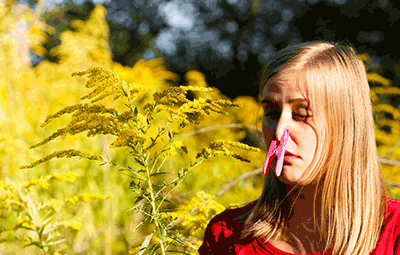
woman with a clothespin on her nose to stop allergens
Oh joy, you survived cold and flu season only to get knocked on your fanny by seasonal allergies. Spring started with tree pollen and mold and is joyfully rolling into summer with grass and ragweed allergens.

Most of us turn to our medicine cabinets to help alleviate those runny noses, red, itchy eyes and sneezing.  Who would have thought turning to the kitchen might be beneficial as well?  There may not be a cure for your allergies but these simple foods might just bring you some added relief.

An apple a day…

Yup, not only does it keep the doctor away but it also works to relieve your allergy symptoms.  The peel, which is rich in quercetin, works as both an antihistamine and an anti-inflammatory.   Allergies occur when our bodies mistake the protein from pollens and molds as bad guys and our immune system gets trigger happy, shooting off histamines.  This natural compound causes in increase in mucus to help flush out the unwanted attackers.  Quercetin stops the immune cells from releasing histamines, which in turns helps to reduce allergy symptoms.

Other fruits and vegetables with high levels of quercetin are leafy greens, tomatoes, berries and broccoli.

Go fishing…

Allergies bring about inflammation in the sinus cavity, throat and eyes.  Making sure you get a lot of omega-3 fatty acids will go a long way toward controlling the inflammation.  Unfortunately, most of our diets are rich in omega-6 fatty acids that are found in mayo, corn oil, certain nuts, fried foods and bakery cakes.  All of these foods have been known to cause systemic inflammation.   If you suffer from allergies that is the last thing you want!

Two of the best fish to eat are albacore tuna and salmon.  Work these fish into your diet two to three times a week.   You will notice a difference in your allergy symptoms.

Ah, nuts…

Nuts like flax seeds, hemp seeds, butternuts, walnuts and macadamia are packed with allergy fighting, immune boosting power.  These nuts and seeds are high in antioxidants and super foods for tackling seasonal allergies.

Studies have found that people who practice the Mediterranean diet of fish, fresh produce, olive oil and nuts are less likely to suffer allergies.  Other benefits from eating this type of diet are an empowered immune systems and protection against free radicals. 

Oh say can you C…

Vitamin C is another great way to treat allergy symptoms.  Foods rich in vitamin C like bell peppers, red peppers, dark leafy greens, kiwi and citrus are natural anti-histamines that can reduce swelling and inflammation.  Vitamin C is also another optimal way to boost your immune system. 

Finding relief from seasonal allergies can be the difference between enjoying the warmer weather and dreading the changing seasons, so try one of these remedies today!

Tuesday, June 7, 2016

Allergies 101

Allergies 101 - all you need to know.


kids playing outdoors

As a child, during the summer we played outside from dusk until dinner was announce and boy, you had better high-tail it for home when you heard the clanging of the bell.  Now a days, you never see kids outside riding bikes or playing ball in the empty lot or for that matter, adults.  Our parents were always on the front porch or working on outdoor projects. 

Are allergies to blame?  It is reported that more than 50 million people suffer from pollen and mold.

Why so many people?

Allergies are the result of your immune system thinking the harmless proteins found in mold and pollen are the bad guys.  While the immune system’s job is to track down and defend our bodies from harmful substances, it gets a little mixed up where pollen is concerned.  When the immune system is triggered by outside allergens, it releases antibodies which move through the blood.  These antibodies tell our cells to release chemicals into the bloodstream, including histamine.  Histamine is what causes your worst allergy symptoms such as a runny nose and sneezing.

Scientist are still trying to work out why some of us react this way to allergens and why some of us don’t.  But whatever the reason, allergies are on the rise. 

What triggers common allergies?

Not the pollen.  It is one or more of the proteins in the pollen.  Just like when people say that they are allergic to cats, that’s not really true.  What is setting off your sneezing and swollen eyes is the protein in the cat’s saliva.  When the cat cleans its fur it transfer the protein to its hair and dander.  It is the same thing for the proteins found in molds and dust mites.

Are there other things I could be allergic too?

Absolutely, the list is endless from latex to leather to perfumes to cleaning chemicals. 

If you think you have allergies your best course of action is to get tested by a doctor.

And the doctor will find a cure?

No, there is no cure for allergies.  But…there are ways to help alleviate your symptoms. 

Here is another idea for you. Instead of trotting down to your local drug store for over the counter medicines or an allergy shot from your doctor, stay home and simply put allergy drops under your tongue!

Sublingual Immunotherapy is a big phrase that simply means:“Sublingual” – Drops under the tongue
“Immunotherapy” – Uses the body’s natural abilities to stimulate or restore a healthy immune system response to fight infection and disease, similar to the way allergy shots work.

It used to be that allergy shots were the best available treatments for hay fever, other allergies, and asthma, but they’re literally a pain to get! Not to mention the cost and inconvenience of traveling to to and from your health care clinic.

A fairly recent review published in the Journal of the American Medical Association says allergy drops are fairly effective in reducing asthma symptoms. The evidence was even stronger in studies with children.

The studies concluded drops were effective in reducing stuffy noses and itchy eyes of seasonal allergies, with 9 out of 36 studies showing a greater than 40 percent improvement. 

Congratulations, you have just graduated from Allergies 101.  Now, go outside and play!

Thursday, May 26, 2016

Food Allergies

Food allergies on a shoe-string budget!

food allergy chart


In today’s economy it is extremely hard to grocery shop so that you can put a healthy, home-cooked meal on the table every night.   Add in food allergies and the struggle is tenfold. 

Researchers estimate that over 15 million Americans have food allergies.   1 in 13 kids are effected.  Below are a few practical tips for managing food intolerance's and allergies on a shoe-string budget that can help you save money and stay on track for feeding your family healthy meals.

First, try not to focus on the foods you can’t have.  Doing this can be very disheartening.  Instead, make a list of all the nutritious and beneficial foods that you can eat.  Surf the internet to broaden your options.

But try not to go overboard.  Keep meals simple until you have a better understanding of your dietary restrictions.  It can be overwhelming to jump right into complicated recipes with foods or spices that you have never prepared before.  Plus, it can be very costly. 

Remember, simple equals less expensive!

For a simple meal choose a protein, a carb, and a green vegetable, such as fish with brown rice and a mixed green salad.   Use this formula for a few weeks to give yourself time to adjust to the new diet before you start getting too fancy. 

Food allergies usually means more time at the stove.  And yes, it is healthier to cook from scratch but with today’s fast paced schedules we don’t always have the time to devote to hours in the kitchen.

Another good tip is to pick one food that the whole family enjoys, such as pizza and spend your time making allergy free crust.  Or if it’s pancakes, find a good recipe that is safe for you to eat and mix up enough dry ingredients for a couple of batches.  There is no point wasting time making homemade yogurt if no one in your family likes yogurt to start with.  

When deciding on which substitute foods to purchase be picky.  There are several on the market but some taste no different than cardboard and are just empty calories.  For example, there are several non-dairy options for cheese.  But do you really want a processed product consisting mostly of wax?  A better option might be nutritional yeast flakes.  They are quite inexpensive, especially if you buy them in bulk and have a cheesy, nutty taste that most kids don’t mind.

Once you learn what works for you “taste-wise” find a quality store where you can purchase things like gluten free products and grain free flours at bulk rate.  Some of the health stores offer discounts if you buy in large quantities.  Do your research!

During growing season find out when the local farmers market is open.  There is nothing like local produce for taste and the cost is usually lower than what you would find in the organic section of the grocery store.  

Feeding a family with food allergies doesn’t have to break the bank.  Learn to be creative so that eating healthy, allergy-free foods on a shoe-string budget can keep everyone happy and their belly’s full. 

Food allergies are no joke and we want to keep our kids and our ourselves as healthy as possible.  To boost your immune systems visit allergena.com to find the product that is best suited for where you live. 

Thursday, May 19, 2016

Asthma and Allergies


May is National Asthma and Allergies Awareness Month – let’s get educated.

allergena cat and dog pet dander immunotherapy

People who suffer from asthma and allergies are most affected in the month of May when allergens are at their highest count. 

There are over 24 million people in the US who have asthma, 7 million of those are children.  An annual 50% reported mild to severe attacks.  By learning some of the facts about asthma and allergies it is hoped that more people will be aware of early symptoms and take action sooner rather than later.  Taking preventative action may improve the quality of life for many asthma and allergy suffers as well as save time and money spent on added emergency bills.

Asthma can be a serious and sometimes life-threatening chronic respiratory illness. It can affect anyone and at any time of their life. And though no one knows why some people develop asthma and others don't, research has found it is a combination of your environment and family history.

Once you have asthma, there is no cure and it will be with you for the rest of your life.

Symptoms of Asthma may include shortness of breath, a feeling of tightness in the chest, coughing and wheezing.  Allergy symptoms vary from mild to severe with congestion, watery eyes, runny nose, skin rash, fever and headaches.

At the start of an asthma attack you may experience itching around your eyes and face that soon progresses to swelling – causing difficulty in breathing.  Severe attacks can also lead to diarrhea, cramps, vomiting, confusion and dizziness.

Allergies occur when your immune system overreacts to foreign materials and kick off an inflammatory response.  Certain weeds, grasses and trees release miniscule bits of pollen into the air, which we then inhale, triggering an allergic reaction.  Other allergens such as dust mite poop and mold spores can also bring about sneezing, water eyes and runny nose.

Scientist are working on a theory to help us understand why some people’s immune systems over react to allergens and others don’t.  Research has also revealed that the longer your system is exposed to the allergen the worse your symptoms can become.  This can happen especially if your immune system is has been compromised.

Awareness month is meant to educate more people about asthma and what triggers have been reported to bring about an attack and how it can be controlled.   Environmental triggers such as smoke, certain molds, pet dander and dust mites are known triggers.  Learning how to avoid these triggers with the correct treatment can help people who suffer from asthma lead a healthy active life.

The AAFA has compiled a 14 page comprehensive guide to Asthma and Allergy awareness month.  Click here to download.

If you are one of the 24 million who suffer from allergies and asthma educate yourself on the mechanics of homeopathic and Immunotherapy allergena.com.  


Friday, May 13, 2016

Dust Mites and Bed Bugs

Dust mites and bed bugs –two totally different types of pests!

cartoon of a bed bug
Dust mites

Dusts mites live in our carpets, upholstered furniture, stuffed animals, drapes and mattresses.  They are akin to the spider and about .25 to .3 mm long.  They are not visible to the naked eye. Dust mites feed on human skin cells but they don’t always stop there.  If we are messy eaters they will feast on crumbs and sugary bits carelessly dropped between the sheets.
  
And like everything that eats, it poops.  Dust mite excretions is the trigger behind our allergic reactions.  Some people breathe in this allergen and have no ill effect, but for others who suffer with COPD, asthma or respiratory issues, dust mites can bring about a mild to severe adverse reaction.   
Dust mites live everywhere that people live. The love warm, moist places like your bedding and carpets.

A female dust mite can produce up to 300 eggs during its 80 to 90 day lifespan and excrete over 200 times its body weight in poop.  Are you grossed out yet?  I am!

It is the most common household allergen, affecting 10% of the population and is the number one cause of perennial allergic rhinitis.  The elderly and kids are the most susceptible to these allergens. 

Bed bugs

Bed bugs are six-legged repulsive, parasitic insects.  They are about the size of a tick and reddish in color.  And like the tick, they are bloodsucking insects, feeding off of you.  They mainly come out at night but are not strictly nocturnal. 

Bed bugs love all beds because of the warmth and moistness but mostly an infestation will only take place in dirty/messy homes or hotels.  Clutter affords them a great place to hide and frequent guests provide food and the chance to spread. They travel anywhere, usually by catching a ride in pillows, stuffed animals, or clothing.

If you have an infestation you will notice small, itchy bites all over your skin when you wake.  They love to wait until dark to come out from their hiding place, feed off of you and then return to their nesting spot to sleep off their meal.  One good thing is that they lack the enzymes to create an allergic reaction in people.  Of course, just the knowledge that tiny vampire-like creatures are sucking on your blood while you are sleeping is probably enough to give you an allergic reaction.

How to stop the bugs?

Bed bugs are very difficult to get rid of without professional help.  If you live in a rental speak to your landlord.  If you own, contact a reputable service who has experience in eliminating these nasty creatures. 

If you are a frequent traveler, bag your clothing in air-tight bags and only take in what you need for the day.  Keep your luggage elevated.  If you are staying at a motel and awake to red, itchy bites report them ASAP to the manager.

Dust mites are much easier to keep at bay.  You can purchase good dust mite covers for your bed and buy cleaning products especially designed to alter the natural qualities of the dust mite allergen.  Heat works wonders, too!  Wash your bedding in hot water and dry on the highest temperature.  Vacuum and dust regularly. 


Wednesday, May 4, 2016

Sublingual Immunotherapy Tablets Reducing Asthma


The results are in!  According to JAMA, the journal of American Medical Association, sublingual immunotherapy tablets not only helping with dust mite allergies but are reducing the risk of asthmas attacks in people with moderate to severe respiratory disorders.  (1)

allergies and dustmites


Allergies are known asthma triggers, especially for people who fall prey to dust mites.  Those tiny critters, which live in our bedding, carpets, drapes and stuffed animals, cab bring about all types of allergy symptoms as well as asthma attacks.

Of the 693 people who participated in the controlled study, all had used a corticosteriod inhaler with poor results.  Half of the group were then given immunotherapy tablets, engineered from dust mite allergens.  The daily dose of immunotherapy tablets significantly reduced the onset of asthma in 364 people.

This was the first large scale study conducted where sublingual immunotherapy tablets were tried as an asthma preventative.
   
Until now, doctors and allergist relied on injections to treat severe allergies, asthma and eczema.  But as we all know, shots can be a pain in the backside, literally as well as figuratively.  Both patients and doctors have been anxious to see if the immunotherapy tablets will work on allergy symptoms as well as to reprogram an immune system not to overreact to foreign bodies. 

Allergena is working to provide people everywhere with homeopathic allergy relief that directly fights the most common allergies in specific regions of the United States and now has developed Seasonal Allergy Tabs.

How do Allergena Seasonal Allergy Tabs work? The immune system defends us against disease. When harmful substances are detected, such as pollens, the immune system creates antibodies, which destroy or neutralize allergens (i.e. pollens, dust and/or mold) that cause us to have allergic reactions. 

However, sometimes even our immune system is not strong enough to defend against these allergens.
Allergena is a Homeopathic Immunotherapy that reduces the body’s negative reaction to allergens. Our homeopathic chewable tablets build immunity by exposing your body in micro doses to whatever it is that you are allergic to. This way, the body becomes safely conditioned to tolerate the allergens that previously brought on allergic reactions, and ultimately reduce allergic symptoms.

Wednesday, April 27, 2016

Is it wheat or yeast causing your food allergies?

Is it wheat or yeast causing your food allergies – a must read


Over the past several years more and more research is being conducted on the cause of food intolerance's.  What are they finding?  All the fingers should not be pointing to wheat.  Instead, we should be looking at yeast.

In 2003 a study was performed on over 300 people who showed minimal to severe food allergies. 

What did the study find? 

Cow’s milk was the #1 cause of food intolerance's and wheat was at the very bottom of the list.
80%   Cow’s milk and their products
27%   Oranges
21%   Cocoa
19%   All cheeses and yogurts
17%   Coffee
14%   Yeast
14%   Tea
12%   Aspartame
11%   Malt
10%   Monosodium glutamate
5%     Hydrolysed vegetable protein
3%     Goats and sheeps milk products
3%     Wheat

What were the people’s symptoms who were part of the study.

bloating, constipation, indigestion or diarrhea
behavioral problems
depression
skin conditions
fatigue
headaches
joint pain
nausea
panic
recurrent infections
sleeplessness

Studies have also shown that usually when a person is allergic to yeast, they are also allergic to cheese and yogurt.

But people like to self-diagnosis, especially with all the health trending articles.  So, when they eat bread, pizza, pasta, rolls and breakfast cereal and have a reaction they think wheat is the culprit. 

What they don’t think about is that all these foods contain yeast and might have be eaten with a piece of cheese or glass of milk. 

If a person is told to avoid wheat and in actuality has an intolerance to yeast they are not going to see much of an improvement in their health.  
 
The same is true for a person who is allergic to cow’s milk.  If a person gives up wheat but not milk they will not see any improvement in their health.  If a person gives up wheat and milk they might get better but it is not because of the lack of wheat in their diet.  It’s because they stopped drinking milk.
It seems the best alternative would be a milk and yeast free diet to start and then try no wheat if your symptoms are not showing any improvement.

For more ways to beat your allergies and boost your immune system visit Allergena.


Sunday, April 24, 2016

Mold, mold everywhere mold!


Mold is everywhere but just how harmful is it to your health?

black mold growing on drywall


According to the Centers for Disease Control, there are tens of thousands of types of mold that can be found outdoors and indoors.

Mold generally grows in moist, dark, cool places from spores that are even smaller than pollen.
Out of the tens of thousands of types of mold most do not affect the health of people.  And though black mold is all over the media and can be very dangerous, it doesn’t mean all mold that is black is harmful.

Illness from mold generally means the person is allergic to the fungi.  If mold allergies are significant enough, skin and blood test will show positive for mold allergens.

Irritants and allergens can bring about two kinds of responses in your body – allergic and infectious.
 
Most people have mild allergy symptoms such as itchy eyes, stuffiness, headaches, wheezing or skin irritations.  The sinus drainage from mold allergies is often thick like honey in consistency.

If you continued to be exposed to mold, you can find your allergy symptoms becoming more severe with aggravated sinus infections.

People who have chronic allergies and are exposed to large amounts of dangerous mold can start to develop worse symptoms such as shortness of breath and fever.  

Those who already have a chronic respiratory disease such as asthma or COPD are susceptible to lung infections as well, which have the potential to be life threatening.

There have even been a few cases reported of people growing a fungal ball in their lungs.  

Aspergilloma, is a clump of mold caused by the fungi Aspergillus.  It is found everywhere, especially in the fall and winter in the Northern region. Aspergillus is also common in the home, including bedding and can be easily recognized as common black mold.

The bottom line, remove moisture and standing water as soon as possible.   Otherwise, it is just an open invitation for mold to grow.  Black mold requires more water to breed than other types of fungi!!

In your home, problem areas can include a leaky roof, clogged gutters, plumbing mishaps, condensation, or water vapor.  Water vapor happens anytime you bathe, cook, run the dish washer , wash the clothes, or take a breath.

Allergena is leading the homeopathic industry with products such as Mold Mix.  Mold Mix is formulated to detect allergens such as mold creating antibodies in the immune system. The antibodies destroy or neutralize allergens (i.e. mold, fungi and/or pollens) that are causing your allergic reactions. Allergena is a Homeopathic Sublingual Immunotherapy that reduces your body's negative reaction to allergens. 


Tuesday, April 19, 2016

Allergies and the Runner

How to Survive Allergies for the Dedicated Runner


Runners workout in all kinds of weather conditions; rain, sleet, hot, cold, sunny or cloudy.  They may check the weather to find a better window of opportunity but they are out there every day persevering for the love of the sport.  Still, I don’t know many athletes who aren’t over-joyed at the first sign of spring and warmer weather - unless you suffer from allergies.

It only takes about 10 minutes of being outside before you feel that telltale itch in your nose, that gritty feeling in your eyes and that tickle in your throat. Oh, joy, it’s pollen season!

Don't be caught unprepared for the onslaught of pollen.  As soon as it begins to get warm or you see the first blooms of spring and you are donning a t-shirt and shorts take action.

Sublingual immunotherapy is an alternative way to treat allergies without injections. According to a 2009 World Allergy Organization (WAO) paper, SLIT is widely accepted and used in European, South American, and Asian countries as well as in Australia and is gaining interest from allergists in the United States. (1)

And let’s face it.  Shots can be expensive, and over-the-counter allergy remedies leave you feeling like you need to take a nap – not a good option if you are planning a 5K run.  

Allergy drops have been getting a lot of attention from many reputable medical sources lately, and for good reason - they work!

A few other tips to help you run your way through pollen season:

·         To keep from inhaling allergens invest in a good allergy-proof face mask. You can find all sorts of masks and face cover-ups on amazon.  If your allergies are really extreme, you may want to purchase sport goggles to keep your eyes clear. Yes, you'll look a little silly but it’s worth the strange stares.
·         Plan your run time when pollen counts are low like late in the evening or after a rain shower.
·         Once you are back home, immediately remove your pollen-packed clothes and hop into the shower.
·         Use a saline spray to clear out your nasal passages, where allergens love to attach themselves.
·         And always remember to stretch, rehydrate, and refuel to keep your immune system as its peak!

Don’t let Spring allergens keep you from the finish line.  Order your SLIT allergy drops today or try the new allergy tabs at meditrend.com.


Saturday, September 26, 2015

Allergies

Allergies – the odd balls in the group!

woman with rash
We are all familiar with the more common allergens – pollen, dust mites, molds, pet dander and food. If you’re reading this post you are probably allergic to at least one of the above.  Here a couple of allergens you are probably not familiar with – the odd balls in the group. 

No leather shoes for me!

If you find a rash on your feet after wearing leather shoes, you might be allergic to the chemicals used during the leather tanning process.  Contact dermatitis, a form of eczema, is a cornucopia for all common skin conditions resulting from direct contact with an irritant or allergen.  More than five million doctor visits every year can be attributed to its red, rash outcome. The solution?  Wear shoes that are not made from leather.

No baths for me – a little boy’s favorite words

Even though we need water to survive, there are some people who get hives or red welts from water.  This is known as aquagenic urticarial.  Even though it is described as an allergy, it is not a true histamine-releasing allergic reaction.  The condition usually last 15 to 30 minutes. The hives are very itchy.    No one can pin point why some people are allergic to water and it is a very rare type of allergy. 

Exercise – or allergy time?

Exercise allergies were first reported in the 1970s.  There seems to be two types of exercise allergies.  One is caused from eating food within two hours of working out and the other happens without eating any food.  Symptoms go from mild hives and welts to severe anaphylasix, with a massive drop in blood pressure and trouble breathing.  Both can be determined by a doctor.  If it’s the food related allergy you can easily fix that by not eating before you exercise. 

To charge or not to charge?

Yes, believe it or not there are people who think they are sensitive to electrical fields generated by computers, cell phones, microwaves, power lines and light switches. Symptoms can include ringing in the ears, headache, fatigue, and other complaints. But studies have shown this is probably one type of allergy you don’t have to worry about.  Almost all the tests have come up empty on proving electrical fields can cause allergy like symptoms.

Keep the change!

For some people handling coins can cause another type of contact dermatitis. Most likely it is a reaction to nickel, a metal mixed with other metals to form an alloy.  Nickel is used in jewelry, zippers, eye glass frames and coins.  People who are sensitive can develop rashes where ever the metal comes in contact with their skin.  As with all allergens that cause contact dermatitis, red rashes and itching, the best treatment is to avoid whatever is causing the condition.

Remember, allergies are the result of our body’s defense system overreacting to foreign particles. Help build your immune system with Allergy Drops through Sublingual Immunotherapy. Allergena has developed allergy drops for where you live!

Tuesday, August 18, 2015

Allergy Myths

Allergy myths – what is true and what is false?

book with magical properties about myths and facts on allergies

Every time you turn around someone you know is complaining about being allergic to this or allergic to that.  Hay fever alone now affects close to 60 million people in the U.S. The more you know about allergies the better you will be able to manage them. With so much information out there, some of it conflicting, it is important to know the facts.

True or false?  Cleaner is better. 

False

 A little dirt and germs are good for us.  It builds up your immune system, so you don't have to endlessly dust and bleach.  Instead, try a vacuum with a HEPA filter, change out your air duct filters and take off your shoes before you come into the house.  Remember, it’s the small tiny wind-pollinated allergens that cause us the most irritation. Reduce the pollen and increase the germs.

True or false? Pollen allergies only affect us in Spring?

False

One of the most common misconception about pollen and seasonal allergies is that the season is short. The spring allergy season can actually start in mid-February.  There are generally two peaks with pollen allergies: tree pollen (early in the season) and then the grass pollens which come out in late April and early May. The “Spring” allergy season can run as long as 5 months. 

True or false?  If you didn’t have allergies when you were little you won’t have them now that you are grown.

False

You can develop an allergic reaction to anything at any time.  It begins with exposure. Even if you've inhaled pollen or mold many times before with no trouble, at some point, for some reason, the body flags it as an intruder. During this particular exposure, the immune system studies the allergen. It readies itself for the next exposure by developing antibodies. Then, the next time you're exposed to the allergen, your immune system kicks into action, triggering a scratchy throat or runny nose.

True or false? Only take medications at the start of an allergic reaction?

False

The best way to get allergy relief is to take allergy remedies on a regular basis and start before pollen season hits.  Studies have shown people were able to increase their tolerance and reduce their body’s negative reaction by exposing themselves to tiny amounts of the allergen.


Tuesday, August 11, 2015

Honey and Pollen Allergies

Does Honey really help alleviate pollen allergies?


baking with honey

It sounds like a win/win situation.  Sweeten your teas and muffins with honey and cure your pollen allergies at the same time but the truth of the matter is honey probably does nothing to alleviate those itchy eyes and runny nose.
 
Still the idea isn't so far-fetched. Some experts point out that honey can contain traces of flower pollen — an allergen and one treatment for allergies is repeated exposure to small amounts of allergens.

In recent years, scientists have discovered that honey possesses some legitimately intriguing properties. Proteins secreted by honeybees, for instance, are mixed with the flower nectar bees use to produce honey, and science has recently discovered that one of these proteins, called “bee defensin-1” has significant antibacterial, anti fungal, and antiviral properties.

The misconception comes from the pollen the bees mostly carry back to the hive.  In the previous post we talked about insect pollinated vs. wind-pollinated? The pollen blowing in the wind (released by non-flowering trees, weeds, and grasses) is what triggers springtime allergies not the pollen in flowers carried by bees. So even local honey won’t have much, if any, of the type of pollen setting off your allergies.

Studies also show that bees don’t just bring flower pollen back to their honeycomb. They carry tree and grass pollen, in addition to mold spores, diesel particles, and other contaminants. Which means that it’s difficult to make a honey from just one kind of pollen (say, weeds and not grass). So, save your local honey for your tea and muffins, not for your allergy medicine cabinet.

If you want help from pollen allergies you need to try a product that consists of what a person is allergic to so the body becomes safely conditioned to tolerate those allergens and reduce allergic symptoms.


Tuesday, August 4, 2015

Pollen Allergies


Pollen allergies or as it is better known, Hay Fever, are directly related to things in our environment.


Lady with a close pin on her nose to keep out the pollen

Did you know Hay fever has nothing to do with hay?  It got its name because long ago farmers noticed that their symptoms of runny noses and itchy eyes occurred during the season of the spring hay harvest, and so they connected it with hay. When actually the watery eyes and sinus headaches are most often due to pollen from the beautiful plants and trees adorning your yard or neighborhood.

The best way to battle pollen allergies is to find out which pollens you are allergic to. An allergist is able to easily test you for various types of trees, weeds, and grasses, and provide you with a list of pollens that negatively affect your body.

Below are a few types of plants that are known to cause pollen allergies:

Trees:  Birch, Alder, Cedar, Hazelnut, Willow, Plane, Olive and Hornbeam Grasses:  Ryegrass &amp Timothy Weeds:  Ragweed, Nettle, Mugwort, Goosefoot abd Sorrel.

Depending on where you live, your individual sensitivity may differ dramatically. If a person lives in an area that has hot, dry, windy days, then there is more of a chance that pollen is in the air. Whereas if you live in areas where the air is cool or there are more rainy days, the pollen is washed to the ground and is less likely to affect you.

Tune into your local weather channel or get online to find out the days pollen count.  Allergy pollen counts allow you to see how you could be affected right in your own hometown. On days when the count is high you don’t have to suffer from pollen allergies or hay fever, which has nothing to do with hay.

Sunday, July 26, 2015

Migration Allergies

Migration allergies are allergies that stop once you move to a different part of the country but develop from all new allergens in a few years after you've acclimated to your new environment.

migration allergies

"Snow birds" are migrating towards warmer climates. There's been a steady influx of people from all over the united states to the south and southwest. Often they rejoice too soon thinking they left not only the cold weather,but also their allergies, behind. The first few years of moving to a different climate, people can often be allergy symptom-free. Unfortunately, that usually only lasts a few years. Before they know it, migration allergies are hitting them like the rest of us.

After the first few years of migration or relocation, the immune system starts to adapt and change. People develop allergies to the trees, grasses and flowers of their new environment. Allergies are hard to escape for good. 20% of all people in the United States has allergies.

We have to remember that allergies are not caused by a weak immune system. On the contrary, the immune system is working too well and overreacting to allergens like pollen. This hyperactivity releases histamine which is the chemical that causes all those annoying symptoms. In the southwest, people react most often to the pollen from ragweed, olive trees, weeds, and grasses. Hay fever is probably the most common seasonal of desert migration allergies, with March through May being the height of the season.

Allergies are influenced by heredity and genetics, but it is possible to lessen your reaction to desert allergies. Following these 3 tips should help:

  • Keep car and house windows closed and with the air-conditioning on as needed.
  • Exercise keeps your immune system healthier. But avoid exercising outside during the morning and early afternoon hours during peak allergy season.
  • Supplements like Allergena - Allergy Relief can help improve your immune system and keep migration allergies at bay no matter where you move.
These 3 steps alone can reduce allergy symptoms by 50 percent. Even though you leave the bad weather, doesn't mean you've rid yourself of allergies for good.

Sunday, July 19, 2015

Autumn Allergies

Autumn allergies can make life particularly miserable for some people, and fall is just around the corner.

autumn allergies


We are still in the peak of long, hot summer days. The last thing on our minds is the chill of autumn air. This is especially true if you are dealing with the allergies associated with summer and those of us allergic to grasses. But autumn is just around the corner. And autumn allergies can make life particularly miserable for some people. Autumn is officially weed allergy season.
“Ragweed pollen is one of the predominant allergens in the fall; it can cause rhinitis and trigger asthma, and it may make eczema worse or cause conjunctivitis,” says Dr. Ivan Chinn, professor of pediatrics at Baylor College of Medicine and an immunology, allergy and rheumatology physician at Texas Children’s Hospital in Houston.
Because of its abundance in the fall, ragweed has its own classification of severe autumn allergies. There are lots of different types of ragweed. Additionally, there are many other types of weeds releasing pollen airborne. This is the major reason doctors will just refer to them all as simply "general weeds" Nevertheless, when it comes to autumn allergies, 99% of the time, the person is allergic to ragweed. It is so prevalent, with so many people, that even when you get an itch in your mouth after eating an avocado or banana, ragweed pollen is to blame. This is due to cross-pollination of the crops.

Weed allergies are not the only allergen affecting us in the fall. Mold is also a major fall and late summer allergen. But unlike with weed allergies, mold spores lie dormant through winter until the spring. Weed allergies start in the fall and can affect us throughout the winter months.

So how do you prepare for these inevitable and approaching allergies? If you have autumn allergies, you can avoid the outdoors when your symptoms are exceptionally bad. Washing your hair at night and changing out of your clothing helps significantly. Pollen stays on hair and skin, causing more and more exposure each time you touch or brush your hair. Make sure you aren't contaminating your bedding or sleeping in contaminated bedding will help as well. Simple products like Allergena Trees, Weeds, or Grasses or Allergena Mold Mix taken as a daily sublingual supplement can prove to be a successful tool to keeping you symptom-free from autumn allergies. When you're dealing with any allergies, always remember that people with allergies tend to live longer than those without them. Allergies are not a disease, it's your body's best defense system at work.

Wednesday, July 15, 2015

Common Things That Can Make Your Allergies Worse

Having allergies is not fun, but there are some common things that can make your allergies worse.

allergies

If you have allergies, most likely you are well aware what is causing them. But there are a few things that may make your allergies worse without even realizing it. Learn how these common items may bring on allergies or worsen existing allergies.

Fruits and Veggies. You may have an allergic reaction to some of the fruits and vegetables you buy. It's referred to as oral-allergy syndrome. A protein found on the skin of some raw produce can trigger allergy symptoms such as an itchy throat and mouth. Peeling produce and even cooking can help remove the proteins. You might be better off avoiding that particular fruit or vegetable.
Contact Lenses. Contact lenses make absorbing pollens in air more likely. Tears allow allergens to get trapped under the lense causing eye irratation. Sticking with your glasses during allergy season works best to avoid these symptoms.
Stress. When you feel stressed or anxious, you are twice as likely to get allergy symptoms or your allergies will worsen. Find ways to relax and destress. It's not only better for your allergy symptoms, but great for your overall health.
Alcohol. Red Wine can make allergy symptoms worse. Sulfites found in wine and beer are the culprit. Some people are especially sensitive to sulfites and will experience worsening allergy symptoms after consuming it.
The Wrong Medication. Knowing which medication will work best for your allergies is important. Make sure you speak with your doctor to find out whether an antihistamine or decongestant is best for your particular allergies. Allergena Products work well on both fronts to eliminate allergy symptoms you're experiencing. Click here for more information on your particular zone and different Allergena Allergy products.
Perfume and Candles. The lining of the eyes and nose can be irritated with any types of perfumes. Perfumes and candles release these particles into the air increasing the chances for making your allergies worse.
Chlorine. Pools treated with chlorine can be a major cause of increased allergy symptoms for people. Chlorine is an irritating gas, and just being near the fumes is enough to bring on symptoms.
Clothing. Washing your clothes every time you wear them is crucial to removing pollen-causing allergies. Fabrics like wool allow allergens to remain on them because of the rough texture. Washing in hot water works best as well as wearing fabrics such as cotton.
Morning Showers. Pollen sticks to skin and hair easily. When you bathe in the morning you are going to bed with the allergens on your skin and hair from the night before. Bathe at night and go to bed in clean sheets and bedding. This helps to reduce lingering allergens clinging to your hair and clothing from the day.
Weather. Many of you already know that allergies are worse on dry, sunny and windy days. It is the perfect conditions for pollens to travel through the air. But light rain can stir up pollen as well.
Secondhand Smoke. People exposed to secondhand smoke have a higher incidence of allergies and worsening allergy symptoms. Smoke is an irritant that travels through the air that can affect your nasal and lung passageways. Keeping your exposure to a minimum will help fight off added symptoms.